
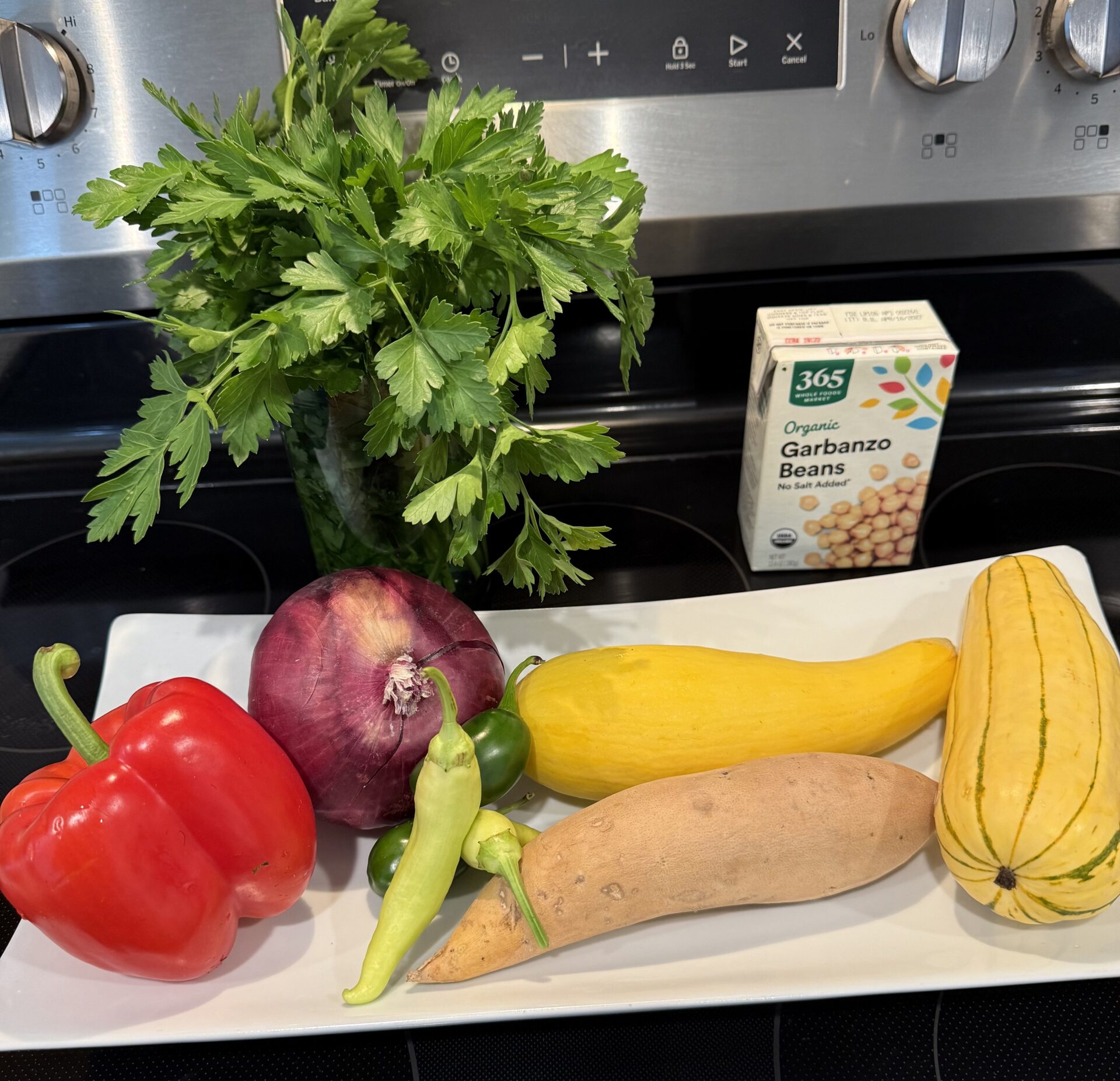
Why recipes aren’t the problem, and the foundational habits that make any weeknight dinner genuinely fast
Learn the core habits that make quick meal prep actually quick: workspace organization, efficient ingredient prep, heat control, and weekly planning. This guide builds the skill system that makes any recipe faster, not just the ones labeled easy.
TL;DR
- Speed is a skill, not a recipe feature: The habits behind cooking (planning, prepping, organizing, heat control) determine how fast any meal comes together, not the recipe itself.
- Separate prep from cooking: Doing all your chopping, measuring, and organizing before you turn on the stove is the single biggest time-saver, often cutting active cooking to under 15 minutes.
- Three heat techniques cover most weeknight meals: The hot sear, the simmer-and-cover, and the one-pan roast handle the vast majority of quick dinners. Master these and you can improvise confidently.
- A stocked pantry eliminates emergency grocery runs: Oils, acids, aromatics, canned goods, and grains form a backbone that means you only need to buy fresh items each week.
- Start with one change, not five: Pick the pillar that addresses your biggest friction point (planning, pantry, prep, heat, or space) and build from there. Small, repeatable habits compound into genuine kitchen speed.
Guide Orientation: What This Guide Covers and Who It’s For
This guide is about the foundational habits and techniques that make quick meal prep genuinely fast, not just fast on paper. It’s for busy home cooks who already have access to plenty of recipes but still feel rushed, disorganized, or stressed when it’s time to get dinner on the table.
By the end, you’ll understand the core skill system behind speed in the kitchen: how to organize your workspace before you start, how to prep ingredients efficiently, how to manage heat so food cooks predictably, and how to build a weekly rhythm that eliminates daily decision fatigue.
This is not a recipe roundup. You won’t find a list of 30-minute meals here. Instead, you’ll learn the habits that make any recipe faster, so you can stop relying on specific dishes labeled “quick” and start cooking with real confidence on your own terms.
Why Quick Meal Prep Is a Skill Problem, Not a Recipe Problem
Here’s a pattern you might recognize: you find a recipe that promises a 30-minute dinner, you gather the ingredients, and somehow it still takes 50 minutes. You feel behind before you even turn on the stove. The recipe wasn’t lying, exactly. It just assumed you already had certain habits in place.
Only 17% of Americans cook from scratch every day, and 27% do it once a month or less. Meanwhile, 60% of Americans prefer to spend less than 30 minutes cooking dinner. There’s an enormous gap between what people want (fast, home-cooked food) and what they feel equipped to do. That gap isn’t filled by more recipes. It’s filled by skills.
The cost of not addressing this is real. When cooking consistently feels chaotic, people default to takeout, convenience foods, or skipping meals altogether. Over time, that erodes both health and budget. The fix isn’t willpower or better recipes. It’s building a small set of repeatable habits that remove friction from the cooking process itself.
Think of it this way: a professional cook isn’t fast because they know more recipes than you. They’re fast because they’ve internalized systems for preparation, organization, and heat management. Those same systems, scaled down for a home kitchen, are what turn easy weeknight meals from an aspiration into a routine.
Core Concepts: The Building Blocks of Kitchen Speed
Mise en Place (“Everything in Its Place”)
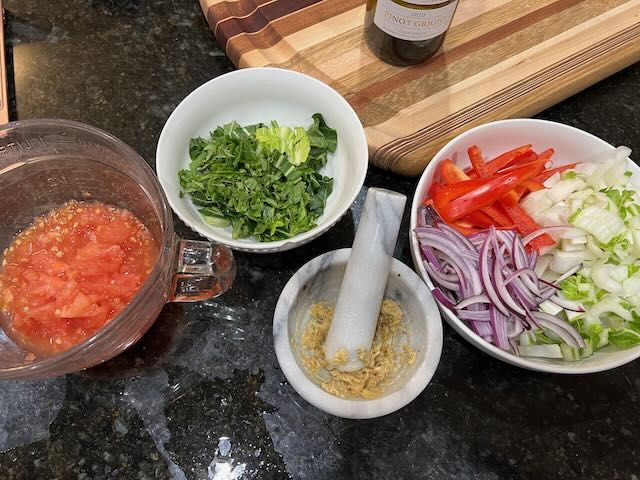
This French culinary term simply means having all your ingredients measured, cut, and ready before you start cooking. It sounds like extra work, but it’s actually the single biggest time-saver in any kitchen. When you’re not stopping mid-sauté to dice an onion, everything flows.
Plan vs Pres: You can’t prep what you haven’t planned.
There is a lot of Meal Prep Advice by influencers, but the key to a great prep is the plan. This is why I provide a meal planning framework that eliminates the stress.
Prep vs. Cook: Two Separate Activities
Most home cooks blend preparation and cooking into one continuous, stressful session. Professionals treat them as distinct phases. Prep is calm, methodical work you can do ahead of time. Cooking is the fast, active part. Separating them mentally (and sometimes by hours or days) is transformative.
Heat Control
Speed in cooking isn’t about cranking everything to high. It’s about knowing when to use high heat (searing proteins, stir-frying vegetables) and when to use moderate or low heat (building sauces, cooking through thicker cuts). Poor heat control is the hidden reason food takes longer than expected or comes out unevenly cooked.
The Pantry Backbone
Having a well-stocked set of staples (oils, acids, aromatics, grains, canned goods) means you’re never starting from zero. A stocked pantry turns “I have nothing to cook” into “I have the base for several meals” without a grocery run.
A Common Misconception
Many people believe that cooking faster means cutting corners or sacrificing quality. In reality, the techniques that make you faster (better knife work, proper preheating, organized ingredients) also make your food taste better. Speed and quality aren’t opposites. They’re both outcomes of good technique.
The Framework: Five Pillars of Kitchen Speed
The system for building genuine speed in the kitchen rests on five interconnected pillars. Each one removes a specific type of friction from your cooking process. Together, they form a cycle: planning feeds preparation, preparation enables efficient cooking, and reflection after each session helps you improve over time.
The five pillars are:
-
Plan the Week — Eliminate daily decision-making with a simple weekly structure
-
Stock the Backbone — Build and maintain a pantry that supports spontaneous cooking
-
Prep Before You Cook — Separate ingredient preparation from active cooking
-
Master Your Heat — Learn the small number of heat techniques that cover most weeknight meals
-
Organize Your Space — Set up your kitchen so movement is efficient and cleanup is minimal
These pillars aren’t sequential in the sense that you must perfect one before moving to the next. They reinforce each other. Improving your pantry stock makes planning easier. Better planning makes prep sessions more focused. Better prep makes cooking calmer, which gives you the mental space to actually pay attention to heat. Start wherever you feel the most friction, and let progress in one area pull the others forward.
Step-by-Step Breakdown: Building Your Speed System
Step 1: Plan the Week with a Simple Structure
Objective: Reduce daily “what’s for dinner?” stress to near zero by making decisions once per week.
You don’t need to plan seven elaborate dinners. I recommend starting with just 2 to 3 dinners per week, and Harvard’s meal prep guidance agrees. Dedicate the 30 minutes you need to plan which will make the shopping and meal prep so much easier. Start small, build consistency, and expand only when it feels natural.
Here’s a practical approach: pick one day (Sunday works for many people, but any day is fine) and spend 10 to 15 minutes choosing 3 meals for the week. Write down the ingredients you need that aren’t already in your pantry. That’s your shopping list. Consider theming your nights loosely: a grain bowl night, a one-pan protein night, a pasta night. Themes reduce decision fatigue without locking you into rigid menus.
When planning for families with picky eaters, build meals with a “base and customize” structure. A stir-fry, for example, can have a shared rice base with different protein or sauce options set out separately. A simplified Cuban chicken and rice lets you serve the components together or apart depending on preferences.
Anti-patterns to avoid: Don’t plan seven nights from scratch. Don’t pick recipes that each require unique specialty ingredients. Don’t confuse planning with perfection; a rough plan you follow beats a detailed one you abandon.
Success indicators: You go to the grocery store once (maybe twice) per week with a focused list. You rarely stand in front of the fridge at 5:30 PM wondering what to make.
Step 2: Stock Your Pantry Backbone
Objective: Ensure you always have the foundation for multiple quick meals without a special shopping trip.
A well-stocked pantry is the difference between needing 12 ingredients from the store and needing 3. Your backbone should include: cooking oils (olive oil, a neutral oil like avocado or canola), acids (vinegar, citrus, canned tomatoes), aromatics (garlic, onions, ginger), dried grains and pasta, canned beans and legumes, soy sauce or tamari, and a few dried spices you actually use.
Build this gradually. Each time you shop, add one or two pantry staples you don’t currently have. Within a month, you’ll notice that most quick and easy recipes require only fresh proteins and vegetables from the store because everything else is already in your kitchen.
Keep a running list (a note on your phone works perfectly) of backbone items that run low. Restock them automatically during your weekly shop rather than waiting until you’re mid-recipe and realize you’re out of soy sauce.
Anti-patterns to avoid: Don’t buy specialty ingredients for a single recipe unless you have a plan to use them again. Don’t let your pantry become a graveyard of expired items; rotate stock and purge quarterly.
Success indicators: You can open your pantry on any given night and identify the base for at least two different meals. Your grocery trips are shorter and cheaper because you’re only buying perishables.
Step 3: Separate Prep from Cooking
Objective: Make active cooking time genuinely short by doing the slow work (washing, chopping, measuring) in advance.
This is where the real speed gains happen. Nearly half of surveyed Americans say they have special “cheat codes” for getting meals on the table quickly. The most effective cheat code isn’t a gadget or a shortcut ingredient. It’s doing your prep work before the burner is on.
You can prep immediately after grocery shopping (wash and dry greens, portion proteins, dice onions and store them in containers) or you can do it the morning of, or even the night before. The timing matters less than the separation. When you walk into the kitchen to cook, everything should be ready to go into the pan.
A practical example: if you’re making a stir-fry, your prep session means slicing vegetables, mincing garlic and ginger, mixing your sauce in a small bowl, and portioning your protein. When it’s time to cook, you heat the pan, and the entire cooking process takes 8 to 10 minutes because there’s no pausing. Recipes like a make-ahead quinoa salad take this concept even further: you prep once and eat for days.
Anti-patterns to avoid: Don’t try to chop while something is actively cooking on the stove (this is the number one source of kitchen stress and burnt food). Don’t skip prep because it feels like “extra” work; it’s the same work, just relocated to a calmer moment.
Success indicators: Your active cooking time (burner on to plate) consistently falls under 20 minutes. You feel calm rather than frantic while cooking.
Step 4: Learn Three Heat Techniques That Cover 80% of Weeknight Meals
Objective: Develop confident heat control so food cooks predictably and you stop second-guessing temperatures and timing.
You don’t need to master every cooking method. For weeknight speed, three techniques handle the vast majority of easy weeknight meals:
-
The hot sear: Preheat your pan until it’s genuinely hot (a drop of water should sizzle and evaporate immediately). Add oil, then protein or vegetables. Don’t move the food for 2 to 3 minutes. This builds flavor through browning and cooks food faster than a lukewarm pan. Works for chicken thighs, fish fillets, ground beef, tofu, and most vegetables.
-
The simmer-and-cover: After searing or sautéing, add liquid (broth, canned tomatoes, coconut milk), bring to a simmer, cover, and let the trapped steam do the work. This is how you cook rice, braise proteins, and build sauces without constant attention. A dish like tomatillo coconut curry with chickpeas and cauliflower uses exactly this approach to develop deep flavor in minimal active time.
-
The one-pan roast: Toss proteins and vegetables with oil, salt, and seasoning on a single sheet pan. Roast at 425°F (220°C). The high, even heat does the work while you set the table or help with homework. Most sheet pan meals take 20 to 25 minutes of completely hands-off time.
Anti-patterns to avoid: Don’t put food in a cold pan (this causes sticking and steaming instead of searing). Don’t constantly lift the lid when simmering (you release steam and add cooking time). Don’t overcrowd the pan; food needs space to brown rather than steam.
Success indicators: You can look at a recipe and immediately identify which heat technique it uses. You stop relying on exact minute-by-minute timers and start reading visual and auditory cues (the sound of a sizzle, the color of a sear).
Step 5: Organize Your Kitchen for Flow
Objective: Minimize unnecessary movement and searching so your physical space supports speed rather than working against it.
Americans spend an average of 37 minutes a day on food preparation, serving, and cleanup combined. A significant chunk of that time is spent walking back and forth, hunting for tools, and dealing with clutter. Small spatial changes create big time savings.
Start with your “cooking triangle”: the stove, the cutting board, and the sink. These three stations should be as close together as possible, with clear counter space between them. Move rarely used appliances off the counter. Keep your most-used tools (spatula, tongs, wooden spoon, chef’s knife) within arm’s reach of the stove.
Set up a “landing zone” near your stove: a clean plate or small sheet pan where prepped ingredients wait in order of use. This is your home version of the professional kitchen’s mise en place station. Line up your prepped bowls left to right in the order they go into the pan.
Cleanup is part of the system too. Fill a basin of hot soapy water before you start cooking. Drop used tools and cutting boards in as you go. By the time dinner is served, half your cleanup is already soaking.
Anti-patterns to avoid: Don’t start cooking with a cluttered counter (you’ll spend time moving things instead of cooking). Don’t store everyday tools in hard-to-reach places. Don’t leave cleanup entirely for after the meal; it makes the whole experience feel heavier.
Success indicators: You can cook an entire meal without leaving a 5-foot radius more than once or twice. Your post-meal cleanup takes under 10 minutes.
Practical Examples: Seeing the System in Action
Scenario 1: The Wednesday Night Stir-Fry
Without the system: You get home at 5:45. You decide on a stir-fry. You wash and chop vegetables, realize you’re out of soy sauce, substitute with something that doesn’t quite work, start cooking in a cold pan, and end up with soggy vegetables and a sink full of dishes. Total time: 55 minutes. Stress level: high.
With the system: On Sunday, you planned this stir-fry and bought the ingredients. Monday evening, you prepped the vegetables and stored them in containers. Your pantry already had soy sauce, sesame oil, and rice vinegar. Wednesday at 5:45, you pull out your prepped containers, heat your pan until it’s smoking hot, and cook in stages (protein first, then vegetables, then sauce). Total active cooking time: 12 minutes. Stress level: low.
Scenario 2: The “I Didn’t Plan” Backup
Even with the best intentions, some nights go sideways. This is where your pantry backbone shines. With pasta, canned tomatoes, garlic, olive oil, and a block of parmesan in the fridge, you have a simple dinner recipe that takes 15 minutes and zero planning. A from-scratch stovetop mac and cheese is another example of a pantry-backbone meal that feels indulgent but comes together in minutes when your kitchen is stocked and organized.
The system doesn’t require perfection. It requires a baseline of readiness that catches you on your worst nights.
Scenario 3: Cooking with Kids or Picky Eaters
A family of four where the kids won’t eat “mixed-together” food. Instead of making separate meals, you use the “modular” approach. Cook rice, prepare a protein (grilled chicken, for instance), and set out toppings and sauces in small bowls. Everyone builds their own plate. The cooking is identical; only the assembly varies. This approach works for grain bowls, tacos, pasta stations, and even soup nights where toppings are served on the side. More strategies for picky eaters on my substack: 8 Strategies to Help Picky Eaters Eat Real Food
Common Mistakes and Pitfalls
The most common mistake is trying to overhaul everything at once. You read a guide like this, feel motivated, and attempt to implement all five pillars simultaneously. Within a week, it feels unsustainable, and you revert to old habits. Pick one pillar. Get comfortable. Then add another.
Another frequent pitfall is confusing speed with rushing. Rushing leads to cuts, burns, and mistakes. True kitchen speed looks calm. If you feel frantic, something in your system needs adjustment, usually the prep phase.
People also underestimate how much a dull knife slows them down. A sharp chef’s knife is safer and faster than a dull one. If you do nothing else after reading this guide, sharpen your knife or get it professionally sharpened.
Finally, don’t compare yourself to cooking content creators who have teams, pre-prepped ingredients, and multiple takes. Your kitchen is real. Progress is measured against your own last Tuesday, not someone else’s highlight reel.
What to Do Next
Start with the pillar that addresses your biggest source of friction. If you’re constantly wondering what to cook, start with planning. If you have a plan but cooking still takes forever, start with separating prep from cooking. If food doesn’t turn out the way you expect, focus on heat control.
This week, try one thing: before you cook your next meal, set out every ingredient and tool you’ll need before turning on the stove. Just that. Notice how it changes the experience. If it helps, do it again next time. Build from there.
If you want structured guidance, GourmetBetty’s meal planning workshops are designed around exactly this approach: teaching the habits and techniques that make cooking faster, not just handing you more recipes. But whether you learn on your own or with support, the key is the same. Small, repeatable habits compound into genuine kitchen confidence.
Use this guide as a reference, not a checklist. Come back to it when a new friction point emerges. Your speed will build not from one dramatic change, but from dozens of small ones that eventually feel like second nature.
Frequently Asked Questions
What are some quick and easy 30-minute meal recipes to start with?
Rather than chasing specific recipes, look for meals that use one of the three core heat techniques: a hot sear, a simmer-and-cover, or a one-pan roast. Stir-fries, pasta with pan sauce, sheet pan chicken and vegetables, and grain bowls all fit naturally into a 30-minute window when your prep is done ahead of time. The recipe matters less than the technique behind it.
Why do 30-minute recipes still take me longer than 30 minutes?
Most recipe time estimates assume you’ve already washed, chopped, and measured your ingredients. They also assume your pan is properly preheated and your workspace is organized. If you’re doing all of that during the “cooking” phase, you’re effectively doubling the work. Separating prep from cooking is the single most impactful change you can make.
How can I make a healthy 30-minute meal without relying on processed shortcuts?
A stocked pantry is your best tool. Canned beans, whole grains, frozen vegetables, and basic aromatics (garlic, onion, ginger) form the base of countless healthy meals. Combine them with a fresh protein and one of the three core cooking techniques, and you have a nutritious dinner without needing anything from a box. Pre-washed greens and pre-cut vegetables from the produce section are legitimate time-savers, not cheating.
Which ingredients are essential for making quick weeknight meals?
Focus on building a pantry backbone: olive oil, a neutral cooking oil, soy sauce or tamari, canned tomatoes, canned beans, dried pasta or rice, garlic, onions, vinegar, and 4 to 5 spices you use regularly (salt, pepper, cumin, paprika, and red pepper flakes cover a lot of ground). With these on hand, you typically only need to buy fresh proteins and vegetables each week.
When is the best time to do meal prep during the week?
There’s no single best time. What matters is consistency. Many people find that prepping on Sunday afternoon works well, but others prefer prepping the night before or right after grocery shopping. Harvard’s nutrition experts recommend designating specific days for planning, shopping, and prep to create a sustainable rhythm. Experiment and find what fits your schedule.
What are some quick meal ideas that work for families with picky eaters?
Use a “base and customize” strategy. Cook a shared base (rice, pasta, tortillas) and a shared protein, then set out toppings, sauces, and vegetables in separate bowls. Taco nights, grain bowls, and build-your-own pasta stations let everyone eat the same core meal while choosing their own additions. This eliminates the need to cook multiple separate dinners.
Sources
-
https://progressivegrocer.com/ready-made-meals-resonating-among-shoppers-report
-
https://yougov.com/en-us/reports/51271-us-convenience-food-report-2025
-
https://gourmetbetty.com/recipes/main-dish/cuban-chicken-and-rice-arroz-con-pollo
-
https://gourmetbetty.com/recipes/sweet-savory-meal-prep-quinoa-salad
-
https://gourmetbetty.com/recipes/quick-and-easy-mac-and-cheese
-
https://gourmetbetty.substack.com/p/8-strategies-to-help-picky-eaters